Brownstone Brooklyn Architecture Guide: 5 Historic Districts Explained
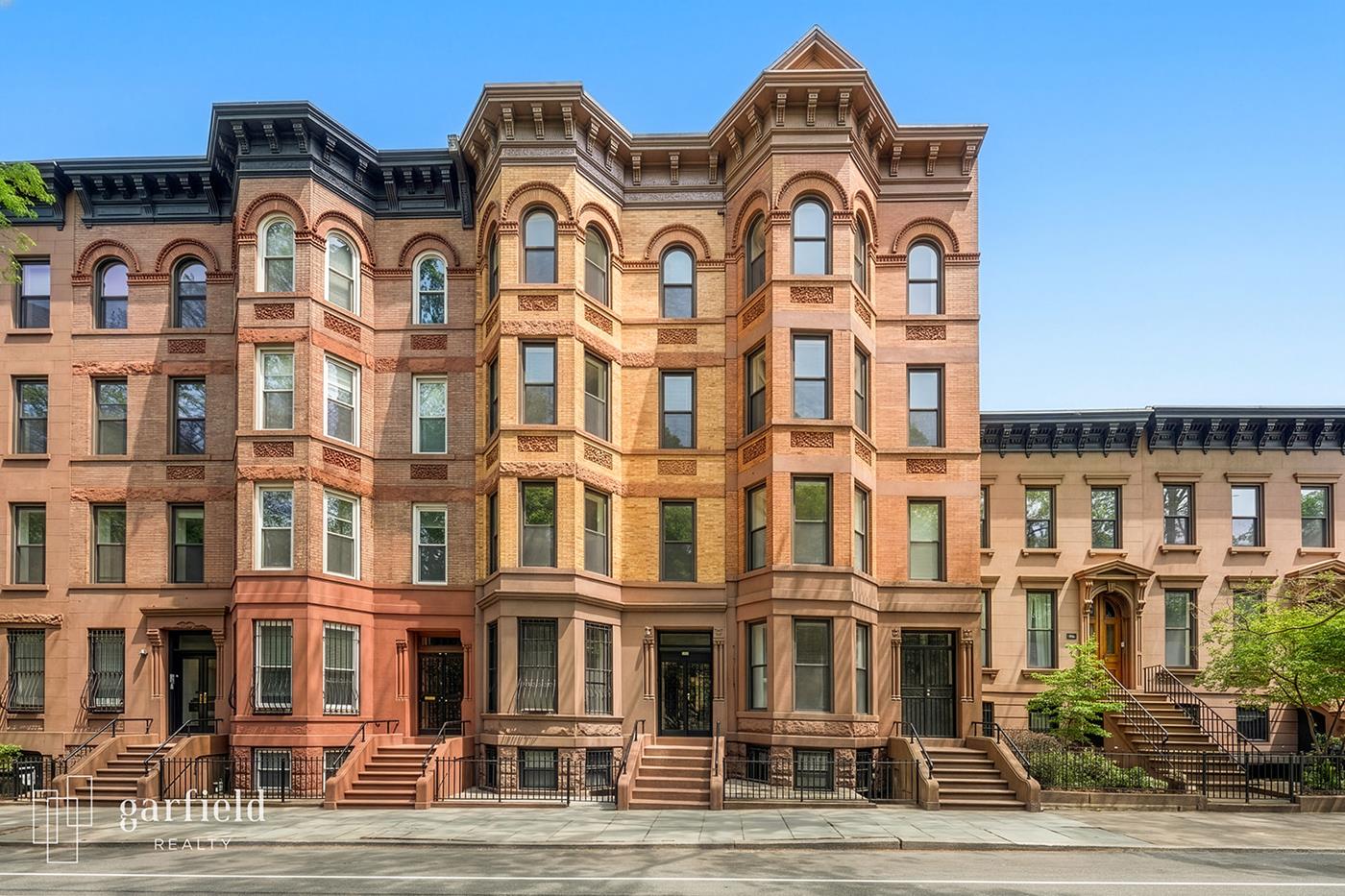
Known for its large concentration of rowhouses with brownstone facades, Brownstone Brooklyn is a collection of historic neighborhoods including Park Slope, Bedford-Stuyvesant, Crown Heights, Brooklyn Heights and Clinton Hill.
Originally occupied by the Lenape people and later colonized by the Dutch, Brownstone Brooklyn has evolved into a showcase of 19th-century design, safeguarded by strict municipal landmark protections.
NYC Landmarks Preservation Commission
The NYC LPC is the largest municipal preservation agency in the country and protects the city’s architecturally, historically and culturally significant buildings.
This includes choosing Brooklyn’s historic districts, which are designated zones that prioritize architectural and cultural heritage and preservation.
| Neighborhood | No. of Historic Buildings | Primary Architectural Styles |
|---|---|---|
| Park Slope | 2,853 | Romanesque Revival, Italianate, Queen Anne, Neo-Grec, Victorian Gothic |
| Bedford-Stuyvesant | ~1,800 | Chateauesque, Renaissance Revival, Gothic, Italianate, Neo-Grec, Romanesque Revival, Queen Anne |
| Crown Heights | 1,752 | Neo-Grec, Queen Anne, Romanesque Revival, Renaissance Revival, Beaux Arts, Arts and Crafts, Art Deco |
| Brooklyn Heights | 1,284 | Federal, Greek Revival, Gothic Revival, Anglo-Italianate |
| Clinton Hill | 1,309 | Italianate, French Second Empire, Neo-Grec, Greek Revival, Gothic Revival, Romanesque Revival, Queen Anne, Beaux Arts |
Making Alterations on Landmarked Buildings
If you are buying a brownstone in a Brooklyn historic district or looking to make certain renovations, you must adhere to city rules. Though you won’t need an LPC permit for replacing broken window glass or repainting a building exterior matched to its existing color, you would need one for such updates as:
- Exterior restoration, in-kind replacement, alteration, reconstruction, demolition or new construction
- Interior work that requires a Department of Buildings permit
What Makes Each Neighborhood Stand Out
Though brownstones are plentiful across Brooklyn, every neighborhood has its own flavor and mix of prominent architectural styles. In this post, we’re looking at five of them and covering a quick history and overview of their distinctive design elements.
Park Slope
Hugging the west side of Prospect Park, Park Slope is a picturesque neighborhood whose tree-lined streets and romantic gas lamps frame dwellings adorned with ornate cornices, stained glass, charming stoops and large bay windows.
History
Back in the late 1700s, the area we now know as Park Slope was a battle site in the Revolutionary War. Around the 1880s, rowhouse and brownstone construction began as people flocked toward the newly opened Brooklyn Bridge.
To protect these iconic 19th-century residences from mid-century urban development, Park Slope’s Historic District designation began in 1973, with several additions since.
Landmark Designation
Made up of over 40 blocks lined with 2,853 historic Park Slope brownstones and rowhouses, many of which have a uniform feel, these areas showcase an impressive array of Romanesque Revival properties and Italianate rowhouses, as well as Queen Anne, Neo-Grec and Victorian Gothic structures.
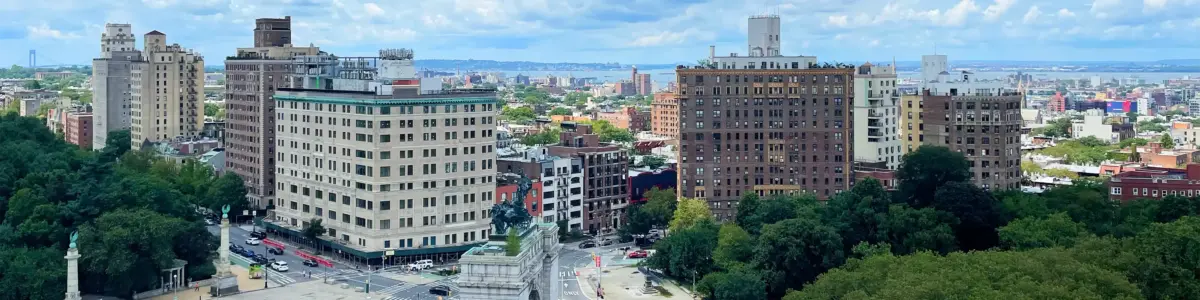
From its oldest landmarks, like the Old Stone House and the Montauk Club, to the stately Grand Army Plaza arch, Park Slope’s treasured sites reach far beyond residential blocks.
Bed-Stuy
To the northeast of Park Slope and just south of Williamsburg, Bedford-Stuyvesant, aka Bed-Stuy, is a delightful neighborhood known for low-scale residential buildings reaching up to four stories, punctuated by canopied trees, church spires and school towers.
History
This neighborhood is a combination of the villages of Bedford and Stuyvesant Heights. Named for Peter Stuyvesant, Stuyvesant Heights formed after the Revolutionary War. In the mid-1800s, Weeksville, which was then a part of Bedford, became one of the country’s first free Black settlements. By the late 1800s, the construction of Eastern Parkway cut through Weeksville, as masonry rowhomes replaced wood-framed dwellings. Through the 1900s, Bed-Stuy and Crown Heights gradually absorbed Weeksville.
Landmark Designation
Recognizing the neighborhood’s architectural wealth, the city set up the Stuyvesant Heights Historic District in 1971. Today, along with later expansions across Bed-Stuy, these historic zones encompass roughly 1,800 landmarked properties. Bed-Stuy historic facades span Chateauesque and Renaissance Revival, Gothic, Italianate, Neo-Grec, Romanesque Revival, Queen Anne and wood frame construction. And with around 9,000 residences built before 1900, Bed-Stuy real estate boasts one of the most extensive collections of preserved Victorian architecture in the United States.
Crown Heights
Bordering the east side of Brooklyn Botanic Garden, Crown Heights is a central neighborhood split by the bustling double-wide Eastern Parkway, where three- and four-story rowhouses mingle with five- and six-story pre-war elevator apartment complexes and lush green trees.
History
Also part of former Weeksville, Crown Heights (once known as Crow Hill) dates to the early 1900s, with settlers flocking to the neighborhood alongside the newly built Eastern Parkway. So many wealthy settlers built grand estates in the area that President Street and St. Marks Avenue were known as Millionaires’ Rows.
As Crown Heights grew throughout the 20th century, community efforts turned toward protecting its residential character.
Landmark Designation
Crown Heights has 1,752 properties throughout its historic districts whose designation began in 2007. Building styles range from Neo-Grec, Queen Anne, Romanesque and Renaissance Revival to Beaux Arts, Arts and Crafts, and Art Deco. Here, you will also find some of New York City’s earliest Kinko houses, which are two-family duplex layouts popular from 1905 until 1913, and several historic churches.
Brooklyn Heights
Just south of the Brooklyn Bridge, overlooking the East River, Brooklyn Heights is unique for its scenic waterfront esplanade with Manhattan views, concentration of brick and sandstone facades wrapped in climbing ivy, and cobblestone carriage-house alleys.
History
Originally called Clover Hill in the early 18th century, Brooklyn Heights became one of the country’s first suburbs in the early 1800s due to its proximity to the water and accessibility by steam ferries. Throughout the 19th century, it was the cultural and financial hub of Brooklyn.
Driven by a desire to protect so many cherished 19th-century gems from mid-century demolition, residents rallied for city protection.
Landmark Designation
In 1965, Brooklyn Heights became New York City’s very first historic district, with 1,284 protected sites, 684 of which are pre-Civil War. You will find classic Brooklyn Heights Federal rowhouses, Greek Revival, Gothic Revival and Anglo-Italianate homes, as well as pastoral carriage houses. Other historic landmarks include the Brooklyn City Railroad Company, Brooklyn Trust Company and Brooklyn Union Gas Company.
Clinton Hill
Recognized for its three- to five-story brownstones, standalone historic mansions and converted industrial spaces, Clinton Hill draws a vibrant creative energy from the local Pratt Institute, an esteemed art college.
History
Clinton Hill is part of what was originally known as The Hill, due to its 95-foot-maximum elevation. It began as a Dutch settlement in the 1640s, made a 1776 appearance in the Revolutionary War and became a fashionable place to live in by the mid-1800s thanks to the addition of streetcar lines and ferries. By 1874, oil tycoon Charles Pratt built his mansion along Clinton Avenue, followed by other wealthy residents, resulting in the street’s nickname, the Gold Coast.
As historic properties faced modern redevelopment throughout the late 20th century, city landmark protections stepped in to preserve the neighborhood’s architecture.
Landmark Designation
Its two historic districts took shape in 1981 and 1986, encompassing 1,309 protected addresses constructed in Italianate, French Second Empire, Neo-Grec, Greek Revival, Gothic Revival, Romanesque Revival, Queen Anne and Beaux Arts styles. Historic non-residential buildings include multiple churches, the Adelphi Academy and the Graham Home for Old Ladies.
Preserving Brooklyn’s Architectural Legacy
Whether you delight in the sprawling proportions of a Park Slope Romanesque Revival or the quiet charm of a Brooklyn Heights Federal rowhouse, Brooklyn offers a slice of architectural paradise for everyone.
Navigating real estate within these designated historic districts requires an appreciation for their past, a deep understanding of the city guidelines that protect their future and guidance from a team with decades of experience across Brownstone Brooklyn.
Buying or selling a historic brownstone?